Showing posts with label PSN. Show all posts

Friday, April 20, 2018

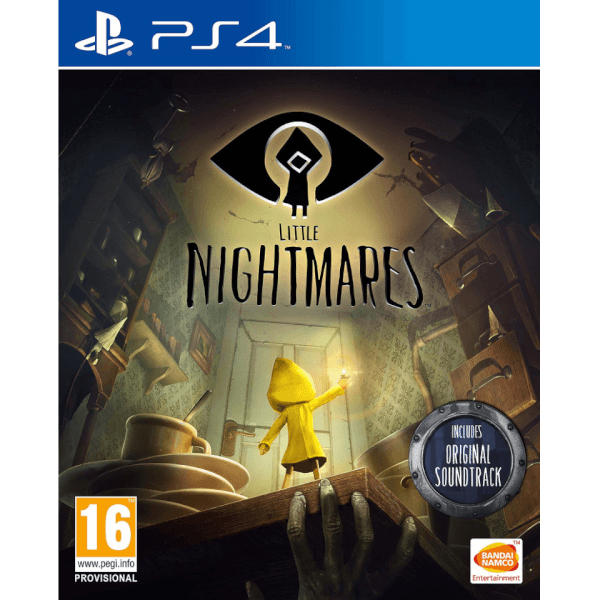
Little Nightmares (PS4): Only a little.

I took a swing on this one at the recommendation of my siblings. I'll be 100 percent honest going in I didn't really know anything about it. But since its an indie game, going by its title and I had a general idea. But I never really had the opportunity to play it. It was always kinda on my back burner. Well after a random flash sale had the complete version down to 10 bucks, I figured why the hell not.

LITTLE NIGHTMARES: COMPLETE EDITION(PS4)
Related image

As is the case with a number of these types of games, we don't get a whole lot of story to start with and are left to figure it out as we play. When we start the game, we are greeted by a dark and foggy screen. As the fog begins to clear we see the form of a person start to take shape. Clearing further we make out that it appears to be a geisha in a kimono, and slowly she starts to turn to the camera. 

Eventually she sharply faces the 4th wall, and we cut to a small child (named Six apparently) jarring awake from sleep. She is tiny if less than a foot tall, wearing a yellow raincoat with a hood that covers her face. She is currently trapped on a traveling ship called "the Maw" and after awakening, leaves to find an escape.


Honestly, after the waking up the game pretty much immediately begins and I really only have Wikipedia to confirm that the location is called the maw, and I'm basically just guessing that she is trying to escape.  Pretty much from the word go you take control of the game so any story that you can gather comes from the pieces you can put together as you proceed along the game. 

And right from the word go, and rather unsurprisingly, Little Nightmares confirms what I guessed and that the play is that of the spooky indie puzzle platformer variety a la Limbo, Unravel, or Inside.  Its got a pretty functionally simple control scheme for the most part, although I will say some button combo's don't feel very intuitive which I will get into later.

You use your analog to move, you have jump button, a run button, and grab so you can pick up objects and pull levers. If you have played the aforementioned Limbo or Inside the control scheme is going to feel very familiar to you. There is also a button to crouch and sneak/slide but for the most part these indie platformers really like to stick to simple game design and sell their product with impressive visuals and subtle story telling.


I will say though, unlike the previous two titles I've compared to, Little Nightmares operates on a full three dimensional plane, so you aren't just moving left or right like a classic Mario game. When you press up or down, you move in the fore and background. Some of the maps will require you to change your directions, and there are some chase sequences that involve this as well. It only became a point of frustration when trying to tightrope on some pathway, veering too far up or down, and falling off and usually falling to my death.

Little Nightmares is pretty fair with checkpoints though, so if you do happen to bumble with ledge like that, you can count on being respawned relatively close to where you fell in the first place so its not going to set you back too far. Honestly with the exception of one section of the game, this was the way I most frequently died until I adjusted to the control scheme.


It's not a very long game either, and I'm waffling if that is to its benefit or detriment. Full story, with no DLC chapers is about 5 levels long and holds roughly about a 2-3 hour play time. Granted its not a full release, but Inside managed to cram 8 hours into their game. The question is what is the appropriate length for a game like this, because I will be the first to admit that after a while it felt like Inside was getting a little too long. Now, that is just on my assessment of the start to finish of the main game. There are 3 DLC levels I have not got to yet and that might appropriately flesh out length, although for a game this size it probably couldn't have hurt to just include it in the main game.

During the course of gameplay there are handful of different "collectibles" you can gather for trophies. As you play through the game there are lanterns to light, little geisha dolls you can smash, and then if you look in the nooks and crannies, little people called Nooms skitter away and hide. But if you can find where they end up hiding you can pick them up and give them a hug, which I think changes the ending slightly? I have been told there is only one ending, which is a little disappointing. Since this is one of those games without scripts they could have tweaked the ending to chance the subtext. Would have added some replayability to a shorter game. This worked really well in the early Atelier series, and would have done well here too.

It's got a very interesting visual style, as most of these indie platformers do. While streaming it my mom (yes my mom watches my stream, I'm popular), she described it as a darker version of The Borrowers. If I had to describe its visual style, I would say its as if Tim Burton did his take on the Spirited Away. With the exception of the Geisha, the nooms, and Six, all the of the enemies in this game have this bloated or grotesque form to them to the point where it looked like they were wearing skin that isn't theirs. It certainly has a fucked up look that supplements the dark tone of the game well.

Seriously, I think this exact blocking occurs in a Studio Ghibli movie.

There really isn't a lot for me to nitpick here either. The game is dark, but with an title like Little Nightmares I guess I was expecting the game to be scary. It really wasn't. Dark, oppressive, somber, but it really wasn't scary. Again, a nitpick at best, because I don't think being scary was the games intention. It really just wanted a dark undertone, and it basically nails it there.

I've already complained about the length of the game somewhat, but the length can be subjective really. A few hours can be the perfect length for some, but 5 levels for 20 bucks? 8 levels for 30? I dunno, despite me getting it on sale for less I still can't help but feel a little bit of short changed. I paid about 10 for the complete edition of the game and that seemed like more fair price to me.

The biggest issues I had with the game through is that some of the mechanics don't feel like they were properly optimized. The crouch and grab are on the shoulders and run and jump are on the face buttons. Despite them being in the positions where you would typically find these buttons in other games, they never felt natural to me in a way that felt right. I could run and jump with ease, but if I needed to slide or grab something on the fly (like climb a chain) holding down the trigger never felt natural to me. I would lose my grip, or fail to grab something.


But the biggest frustrations I had came in the 4th level in a spot that wasn't even really a puzzle.  There is a segment where you basically have run across a table and avoid gorging heavy patrons or else they will shove you into their mouth. Once you do this, you need to leap off the table to a climbable wall. The problem I was having is I was having real issues with the grab radius. When you see something reach with full extent of their arm, by most video game logic you would think that you have safely found the range to avoid losing in this segment. This is not the case here, and the grabs were always just a bit more than I expected them to be. So in trying to avoid getting grabbed, I would walk right into the range of another.

This was only made even more frustrating from when I reached the end, when I would go to make the jump, the physics would not consider me close enough, and basically glitch push me away from the wall. This happened to me like 3 or 4 times which made me think that there was a different solution to get past this area. So naturally, while exploring some other option I was constantly getting killed in the same spot of what otherwise would be a pretty easy game and it was getting immensely frustrating. Lo and behold I actually just needed to step one more step off the ledge to actually get the distanced needed to clear this jump. Fucking annoying.


But if I am being honest I really can't hold that as a point against it, because it was me playing poorly. The circumstance caused a clipping that made me think it was just a poor design, but when pulling clips it really was just my goof. But all things considered It didn't really mar my experience with the game, just added a pointless 20 minutes of fuckuppery.

At the time of writing I haven't gone back and finished the DLC chapters yet, but I intend to do so. All in all I would say that I enjoyed my time with Little Nightmares but I wouldn't say it blew the doors off for me. That isn't the negative knock it sounds like though. The gaming market place is getting pretty flush with arty, minimalistic story platformers. I basically had an idea of what I was getting into when I started this game and it was exactly what I got. I will say the story wasn't what I expected it to be so that was the pleasant surprise.

I honestly really don't have much more I can expound upon here. Little Nightmares is a pretty solid game, although perhaps a little pricier than I would have liked if not on sale. If you are into this style of platformer the it is going to check all the boxes for you. If you are looking for something with a little more meat on it, I would advise for the complete edition of the game.


Wednesday, August 23, 2017

Hellblade: Senua's Sacrifice (PS4) - A Dark Road

When I first got my Playstation 3, one of the games I was very much excited for was Ninja Theory's action epic Heavenly Sword. The game was pretty short for the most part and drew many well deserved comparisons to God of War but all in all it was a pretty enjoyable experience. Sadly, there was no option to pick up a sequel.

But Ninja Theory did keep working on games like Enslaved and DmC, and a few years ago came a rumbling a new title they were working on. A shorter game trying to get AAA class production with a much smaller team and budget. The trailer originally had me think it was a Heavenly Sword sequel, but they denied that saying this was its own property. The trailers had me curious so for 30 bucks I took a swing at...

HELLBLADE: SENUA'S SACRIFICE(PS4)

The beginning of Hellblade, we follow Senua as she paddles through a darkened river on a hollowed out log. A quiet narration tells us this is her tale, and if we follow along perhaps we can have a part to play in it. Senua appears aware of this conversation, as she looks back directly at the camera. The narrator hushes us and quietly lets us know that she heard us.

Senua is a deeply troubled girl with a very tortured upbringing. As we play through the game we learn about her relationship with her father, mother, the people of her village, and one beacon of strength that shined through to her, a boy named Dillion. Her beloved Dillion has been taken from her, and she is off to try to bring him back.

It is a treacherous journey though as she is plagued by a "darkness" that follows her. She is cursed with a rot that continues to rise up her arm, and is constantly haunted, encouraged, berated by voices that antagonize her with every step, as well as visions that hound her and constantly distort her reality. Her only option is to confront the goddess Hela and plead her case, so she stomachs her resolve and presses forward.


So I'm not going to lie to you, Hellblade is a pretty fucking intense experience. If I had to describe it for a genre classification, I would say that it is very much a walking simulator first, with puzzles intermixed for most of the major set pieces, and occasionally intermixed with tightly focused combat as you play through. It would hesitate to call it an action game even though you can probably see it that way. Although the game is called Hellblade, combat is not the game's primary focus.

I lean to walking simulator because as you travel from set piece to set piece, you get more and more of the narrative from these surreal fade sequences Senua experiences. Constantly shifting from visions of her past and visions of a twisted surreal reality. With each step the voices that follow you are constantly chattering and heckling, whispering that she is going to die, she cant do it, yes she can, who does she think she is, etc, etc, etc. It goes on and on. The nature of how the sound projects, this feels like a game that should be played with a good surround system or a quality set of headphones.


Generally the flow of Hellblade follows a pretty simple path: Walk to your destination while experiencing the near psychotic break that Senua is having, reaching your objective, solving a puzzle or finding the necessary runes to open a door, and fight a wave of baddies. It's generally always these 3 things, although not always in that order.

Typically you will approach a locked door covered in the runes, and you need to wander around your environment while looking for the necessary symbols within the environment. Sometimes these can just be found painted on walls, but sometimes you might see is as shadows or light projected somewhere. Or in the latter stages, you need to stand somewhere else in the location so your surrounding environment actually forms the said shape. Think how you might rotate the map in Echochrome, for example.

The puzzles aren't exactly mind bending. Most of them present the solution right out the gate, you just need the right combo to make it all fit. Again, many of these are visual in nature so they aren't exceptionally difficult. Some just require some fast movement, but since the maps aren't overly complex I would say that overall the puzzles in this game were not very difficult. I think there was only one puzzle I got really hung up on and it's because I wasn't paying close enough attention to the cutscene prior.


And I suppose you couldn't really justify calling your game Hellblade if you didn't have some kind of sword combat in it. This was the aspect of the game that I was most worried about because when I saw the combat in action, it looked very fast paced and arcadey, weightless, as if there was no response to my swings. Happily, this was a grossly incorrect assumption on my part and combat actually ended up being way better than I expected.

It follows a pretty standard system: Light, Heavy, and Melee attacks with a dodge and block. It's pretty basic at its core but they add a bunch of little tricks to change up the combos to make them feel more skillful. For example, if you use your light attacks Senua just swings quickly with slashes. But if you use a light attack after say using a parry she has this jumping twist move to start the combo, I'm not sure if it's a stronger move but it looks cool as hell. In addition, if you dash towards a foe and use the same light attack, Senua does that jumping high stab I can only compare to Brad Pitt's Achilles' in the movie Troy. (A couple of games used this move).


The camera in battle stays high and tight in the 3rd person perspective but somehow doesn't feel disorienting. When enemies swing you can dodge away and dive back in for quick combos, or if you time your block correctly you can parry the strike for a unguarded retort. Sometimes there are multiple enemies, so while there is no lock on reticle, the camera will stay focused on the target you are fighting. but since the camera is so tight, you constantly need to continue to back up to make sure can see all the danger.

Generally the enemies are all variants of marauding northmen, but they evolve to have different weapons and moves. Some might have shields that force you to melee to break the guard before you can attack, some have heavy weapons that your guard will not hold up against. Some enemies fade to ethereal form and makes them invulnerable to attack. When this happens Senua can use her focus to bring them back to reality and slow time briefly to deal a lot of damage in a short time. But you have a limited number of uses so it's wise to save them for panic moments.


The combat excels when it uses the auditory clues from her psychosis to actually give you hints during the fight. Like while I was engaged in a fight with some hammer lugging troglodyte, the whispers started saying "Watch out! Look out! Behind you!" and I panicked and hit my dodge to the side. Sure enough just as Senua made her dashing sidestep, the sword of an enemy I didn't see came swinging down right where I was standing.

In one of the early boss fights, an enemy shifted into shadow and no matter what I did I couldn't seem to deal damage. I was blocking but it wasn't helping. But as he would ready his attack, the voices would start yelling at me to focus, or focus now. I originally thought it was because I was taking damage and were scared, but what it was actually doing was letting me know to use my focus to bring him back to a physical form. It was a very cool eureka moment and made me realize perhaps I can't just ignore the voices.


The visuals in this game are fucking stunning. I almost can't believe that it was done with just 20 people. The environments are all picturesque and gorgeous, with weather actually changing within the environment as you spend time there. The shifts to surreal hallucination are magical yet harrowing. There is a long segment in the late game that very much reminded me of the early stages of Dante's Inferno but with way more movie-like production value. Some of the voices in her head get visualizations done with live action, but they are filtered and blurred to the point where I can't confirm if they were digitally done or not.

But Senua herself? Holy shit.  I have been a big proponent of the use of motion capture in video games, because they give us stellar examples like Grand Theft Auto 5, Infamous: Second Son, and The Last of Us. But Ninja Theory might have set the new standard for how it's done. Using a single lighted head harness and some effects makeup they developed a system that basically captures a 1 to 1 recording of facial reactions that are animated in the game real time. It's fucking impressive.


And it's this that really makes Melina Juergens performance as Senua come to life. Senua's story is gutwrenching, and the ever present hysteria and agony in her voice, the constant fighting she is doing with the voices that berate her for the whole journey, being forced to constantly relive the tragedies of her life. It's fucking brutal, and Juergens' performance was crucial to really setting the tone. I had never heard of this actress before, so I did a little digging to find out she's actually the video editor for Ninja Theory, and this is one of her first actual acting roles. Holy shit, Melina. Bravo.

There is also and option to turn on a photo mod which I dabbled with a bit. It's pretty simple and intuitive to use, although admittedly it's a little tricky to time when you are trying to get it to freeze in an action shot. It let me know that the camera is set a certain way in combat because that's the way it looks best. When I'd try to spin the camera for a cool action shot it would never look as good as the behind the back look. Still, you can pull together some very gorgeous screens with this. All of the screenshots in this review are ones I did myself. This game is just fucking beautiful.

A lot of facial acting went into this game, and it really sells Senua as a character.
An absolutely stellar performance by Juergens.

Hellblade features a score you would expect for a story in this setting. Classic instruments performing that epic fantasy score. I can't say any one song jumped out to me but everything had a place. Much of the game didn't have music as I traveled from place to place, low melodies as Senua experienced some flashback or remembrance of conversation from her past. The other voices are well acted, and the narrator really deserves credit for framing the whole story. Like a grandmother whispering a sad story, she has a haunting presence that is felt from the very first lines of the game.
It's not a terribly long game to play. I think by the time I finished it I it had taken me maybe close to 7 or 8 hours. While that is short, the game is only 30 dollars and I have payed 60 for games that don't last that long. Ninja Theory's Heavenly Sword only ran about that long and that was a full priced game, so this didn't bother me terribly.


A lot of people are complaining that the combat in this game wasn't necessary. I understand that the walking simulator is becoming more and more prevalent and accepted as a genre these days, but I do feel that if you took out the combat, there will be very little left to hold the rest of Hellblade up. At that point it would just make more sense to cut things down and make it a movie. But if you did that I don't know if I would have felt as invested as I was. There are also story mechanics interwoven in the combat that wouldn't work otherwise if it wasn't there.

But with that in mind, I will say that for as good as the combat felt, it does get a little bit samey feeling after a while. Yes the enemies evolve a little bit to require more tricks to actually put them down, but after a while they just start sending more and more waves of them at you. Some of these are for story effect but if this was say a 60 hour epic, it would probably grow tiresome to continue to do.


There were a handful of glitches that are probably already being patched out. Mainly with the subtitles. There are a number of grammatical inconsistency (something I would know nothing about because I am a flawless writer) and timing issues on the subtitles.  There was one glitch where I tried to climb up a ledge, and instead climbed down through the floor that left me falling in limbo forever till I restarted the game. There is also the "head turn" thing that happens when you spin the camera around Senua where she whips her head from side to side to look at what the camera is on instead of posing like I'm trying to get her to do. She always has this kind of open mouth gape of an expression too in resting moments that is not very photogenic either.

And while I praise the absolutely exceptional acting done in this game, a little more volume on the narration would have been appreciated. I know it's going for a specific tone and effect with the soft spoken whisper, but I had that sound effects and music dropped well under 70% and maxed out vocals, and there are still lines of dialogue I can't hear. This is even worse when compounded with the off timed subtitles.

This game could be an easy platinum trophy for you collectors out there. I got all of them but one in a single play through because apparently I missed one of the way-stones that explain the Norse lore throughout the game. It was the only achievement I missed and if I got it, it would have been platinum'd so it's certainly possible to do in one go. (I am pissed I missed it, honestly)


I certainly had more reservations and expectations when I first started seeing live gameplay footage of Hellblade but I was very happy to see that not only did it exceed my expectations, but I was left thoroughly impressed. It's certainly not a perfect video game experience, but Ninja Theory proved that they could can produce a high quality title for a lower price and smaller budget. I find myself wondering how fast they could have pumped this out if they had a slightly larger team to work on it.

I very much enjoyed my time with Hellblade: Senua's Sacrifice. Everything was done to properly fit its length. Any little annoyance I could really come up is effected rounded out by the fact the game isn't long enough for them to become a persistent problem. If they can reduce the development time, I would be ok with more of these shorter games at half cost. Hellblade isn't a game you will probably play over and over and over again, but it's certainly a game that's worth getting through once for the experience.


Problem is, thanks to this game now I question if I'm actually schizophrenic.
Shut up, No we're not.
You shut up.
Tsch, asshole.

Tuesday, March 14, 2017

Salt and Sanctuary (PS4): Soulselvania

A friend had suggested this title to me somewhat of a ways back and I gave it a causal nod, a quick viewing of the video and then pretty much forgot about it. It was pitched me as a game that I should give a try if "I liked games like Dark Souls". Somewhat recently it came across my mind as I had just used my speedway points for a free PSN card and had 20 clams to burn. Looking to mix up the pallet of the stuff I had been playing recently, I decided to take up my friends suggestion.

SALT AND SANCTUARY:(PS4)

Much like its souls-ian predecessor, the story for Salt and Sanctuary is pretty scant, but if you follow along with what you learn from NPCs, you can piece it together. You are one of the worlds many Saltborne (oh yeah, this is unabashed parody). You are stowing away on a ship that is carrying your nation's princess, in transit for a wedding of political alliance. But during the course of the travel, you ship is ransacked by marauders. One of the dying crew pleads for you to find and save the princess.

As you battle through the ship and approach the main deck, you as set upon by mammoth beast called the Unspeakable Deep. It promptly smashes you into paste. The ship is destroyed, but you find yourself washed ashore of a beach. Collecting your resolve you decide to search out the princess, still. Upon meeting a old man on the beach and telling him of your creed, your adventure can then begin.

Good fuckin' luck.

So as my cheekily written title leads in, this game borrows incredibly heavy from the mechanics that made From Software's Souls series so popular. Right down to the menu, sound effects, and fonts used. it functions with a similar combat system, stat structure, equipment system, and inventory mechanics. Even saying it borrows heavily is being pretty generous.

But the biggest shakeup and what sets it apart from Souls similar games like Nioh, Lords of the Fallen, and so on is that this is all done in a hand drawn 2d style of gameplay. So some things change, primarily in the combat of the game. In Dark Souls you could lift your shield and circle while you wait for an opening, using your roll to protect you from swings. In S&S however there is no circling, and you have to bring your shield up to defend, parry, or dodge roll through the attack.

Ska Studios took great care to make the combat feel weighted and intentional.
Weapons and their use all affect how you approach every fight.

However, because of the new layout of the game there are new strategies that present itself. This game is only working on a 4 point axis so now you have ledges and stairs above and below you. So now you have a jump mechanic that comes into play and you can use the stage around you to evade or retreat if necessary.  The people at Ska Studios (bleh on the name) did a very good job of find a way to work all these mechanics into a 2d plane and have them work well.

It also has a familiar feeling to another 2d series of games, now that I think about it. The map is a giant expanse that has locked pathways and shortcuts that manage to loop you back around to checkpoints and previous areas. There are ladders to climb and knock down, leaps of faith to take, you will learn new abilities as you play along the game that open up new areas for you to explore, so its not a linear game. It's kinda like if Metroid and Castlevania had some kinda gamebaby. They really should have word for that.


Unfortunately, this means it also contains one of the most annoying combat features that you get in Castlevania games and that is the knock back. I can't think of how many times I would be fighting some baddie in this game and get hit with an errant shot that would almost always send me off a ledge plummeting down to my death. It almost happened like clockwork. 

Dying too borrows from the Souls convention. Where if you die, you lose all the salt you were carrying, which in this game functions as your XP to level up your character or improve you weapons. When you die, the monster that defeated you will hold it with some smoky mist around them and you have to kill them to get it back. If you die from falling from a ledge without having been hit by an enemy, instead a monster bat will spawn and attack you. Thankfully it is usually very easy to defeat and easy to gain your salt back. Even dying to a boss is somewhat forgiving since you don't actually need to beat them to get it back, just knock down about a 5th of their bar to at least save it for this attempt.

But S&S curiously also has gold that can be spent at shops as well. You can use this to get basic equipment, most of which you will find as you play along the game anyways. But you can us it to get small bags of salt for a little more leveling, or for some of the base level upgrade materials. Every time you die you will lose a portion of this, but I can't think of a single instance where not having gold inconvenienced me in some way. Don't really see why its in here.

You make offerings to add shops and functions, but when you pick they are locked in.

The art direction of the game you could argue is somewhat cartoony I guess? The character creator is somewhat goofy looking and you really don't have a whole lot of freedom other than hairstyle, color, and if you wear lipstick or not (boy or girl). But this is Ska Studios, and the art design is very reminiscent of one of their previously releases Charlie Murder. Stiff and a little janky.  Where the art direction really shines is in its monster design. The washed out color pallet and the stiff, almost old flash-esq animation really lends itself to the game's monster design.

An example where I feel it really shines is one of the earliest bosses in the game, the Queen of Smiles. Basically she is kinda of skeleton queen who can summon swords to throw at you, She's basically got a skull for a head without a bottom jaw, and it appears to be weeping blood. The way the characters are designed it just looks fucking awesome and with the kinda tense operatic boss theme that plays when you fight her, it just frames together a scene for a great moment. The stiff animations make it feel lifeless and creepy, and just lends to her overall design. Many of the bosses and monsters have this effect, and it's great.

I'm not ashamed to admit this fight took me more tries to beat than it probably should have.

One way how this game differs is in relation to cooperative play. Surprisingly, there is very little online play to speak of. You can sometimes find tombs where characters died in a section, break them to see a few after images to see how it happened, you will sometimes see a another playing in your shrines, but that's really about it. You can play this game two player though. Basically as you set up shrines around the world and you can place offerings to basically inhabit your shrines with villagers who provide various services to the player.

For co-op play, you need a sellsword. By talking to them you can summon an additional player for couch co-op. The catch is they have to be on a different account so they can't just use any other characters you have previously made. So if your co-op friend doesn't have the game, you can work around this by making a generic User1 account (on ps4) and make a character that way.


Other than that there doesn't seem to be much else in the way of online. You can't invade other players or be invaded, you don't see after images of players progressing around the same areas you are. You can't drop a sign to be summoned to help someone in an area just before a boss. So one hand I can't actively sunbro in front of a boss and farm salt, but on the other I don't have to worry about trekking for an hour into unfamiliar territory and have to worry about some jackass spawning into my game and ruining my progress, (there is plenty of other shit to do that).

The aforementioned boss fight theme is pretty great, but I find the soundtrack of the game to be rather lacking. Maybe not lacking but unimpressive. I've said the same thing about the Souls games sometimes, or the Tales series. The music or lack there of works for the game, but its not memorable. In many instances you won't even have music, just a couple of notable tracks here and there to punctuate things, such as boss fights or your home base.

S&S features a creed system that operates loosely like the covens of the Souls games, but without the persistent online mechanic, I found very little reason for it. You can't unlock certain items to buy without changing your creed, which causes you to be an apostate. You can change a shrine to your shrine which gives you sin, and doing either of these things will make people hostile to you, but if I am being honest I didn't find very much reason to do it.


Story and questlines are scarce in this game and much like the series it apes, much of it can be found by talking to the NPCs you come across on your adventure and it fleshes the tale out a bit more if you do. There doesn't appear to be a lot of them though. And spoiler alert, the original reason for starting the adventure never really seems to be addressed by the end of the game. I might have missed it, but I honestly don't think that I did.

One complaint with the game is probably to some also one of the game's biggest assets: This game is fucking punishing. I've struggled with difficult games before, Even when I think I'm hot shit at Dark Souls when a sequel comes out I always have that moment of "Fuck this, this game is impossible." Whelp, Salt & Sanctuary that is prevalent as well. This game is going to chew you up and spit you out, and it will do so often. It is particularly rough in the early going when you are still figuring out all the mechanics and the the bosses will usually wreck you before you even get a chance to observe their patterns. This game is an exercise in stubbornness.

Some fights will greatly test your patience.

The difficulty curve was all over the place too. Once I finally got a decent build in place, I would mow through some enemies only to get fucked by one that was way more difficult than everything around it. Some bosses I would approach and bring down on my first attempt, others would just rip me a new one for 50 attempts. It never felt like a gradual build up.

Probably the thing I didn't like the most was the somewhat confusing skill tree system it uses. If you've ever played Path of Exile and looked at their skill tree you would have a good idea of what I'm talking about. This is a game where you kinda want to have an idea of what kind of character you are trying to go for at the onset, and you will want to work your way from there. You earn gems to move a node with each level, and some require multiples to do so. There is also a system of grey gems which let you remove a node and replace it.

The skill tree can be daunting. I just looked what what weapon I wanted to focus
and then followed the line that took me to the highest level of that weapon.

But what it doesn't explain, for example, is when you unlock the skill nodes for say Greatweapon 5 you don't need to have levels in great weapons 1-4 anymore. With enough gray gems I could reset a significant number of skill points, but I never thought to do it because it and respec as I needed. They still provide a stat boost, but really they are meant to fix a fudge up or if you went down a path you didn't want to for the end game of your character.

You can perhaps consider Salt & Sanctuary to be a Souls or Castlevania clone, but I really see it as a love letter to a pair of games that basically invented a pair of genres. The game will drive you to a fury, and make you want to spike your controllers, but it also provides that same level of satisfaction once you actually muscle your way through it. By the time I ended up getting all the way through it I seem to have burned a good 40 hours or more.

For a game that was like only like 18 bucks, I have to say that counts as a pretty worthwhile purchase.


Fuck the stupid Witch of the Swamp.
That fight was impossible.

Monday, May 16, 2016

Yakuza 5 (PS3): This Blog Has Finally Come Full Circle

Way back in 2011, there was a guy who had an assignment in one of his graduate college courses. The assignment basically wanted this guy to create and make a post on a new blog. That student decided since all he really did with his free time was play video games, he would make his blog about game reviews. And for the first review he did, he decided to do it on a highly under-appreciated gem on the PS3. A game by the name of Yakuza 4.

That was five years ago. I have been basically barfing text onto this thing for minimal traffic because it was a great way to put my thoughts on games into words. Some of you have stuck around from the beginning. A couple of you might be newer readers, and the other 97% of you are google bots clicking my images. Either way this blog has finally come full circle. After years and years of begging, emails, and tweets (that I didn't do) the west finally convinced Sega to release this installment of the game outside of Japan. Three whole years I waited for it, and now I have it. Let's get to it.

YAKUZA 5 (PS3)


As has become the norm, the story of the Yakuza franchise has been broken up in multiple chapters divided up amongst longtime protagonist Kazama Kiryu, his adopted niece/daughter Haruka, Yakuza 4 returning cast members Taiga Seijima and Shun Akiyama, and new character to the series Tatsuo Shinada.

Kiryu is currently living away from the sunshine orphanage he runs and is working as a taxi driver in the city of Fukuoka. After a less than chance meeting with current Tojo clan head Daigo Dojima, Kiryu learns that the leader of the Omi alliance is on his deathbed, and when he passes war will break between Tojo and Omi once again. Dojima looks to build his strength to prepare for the coming war, but inexplicably goes missing. Kiryu is once again yanked into the affairs of his former clan to try to set things right.

No matter what Kiryu does, he just can't seem to stay out of things.

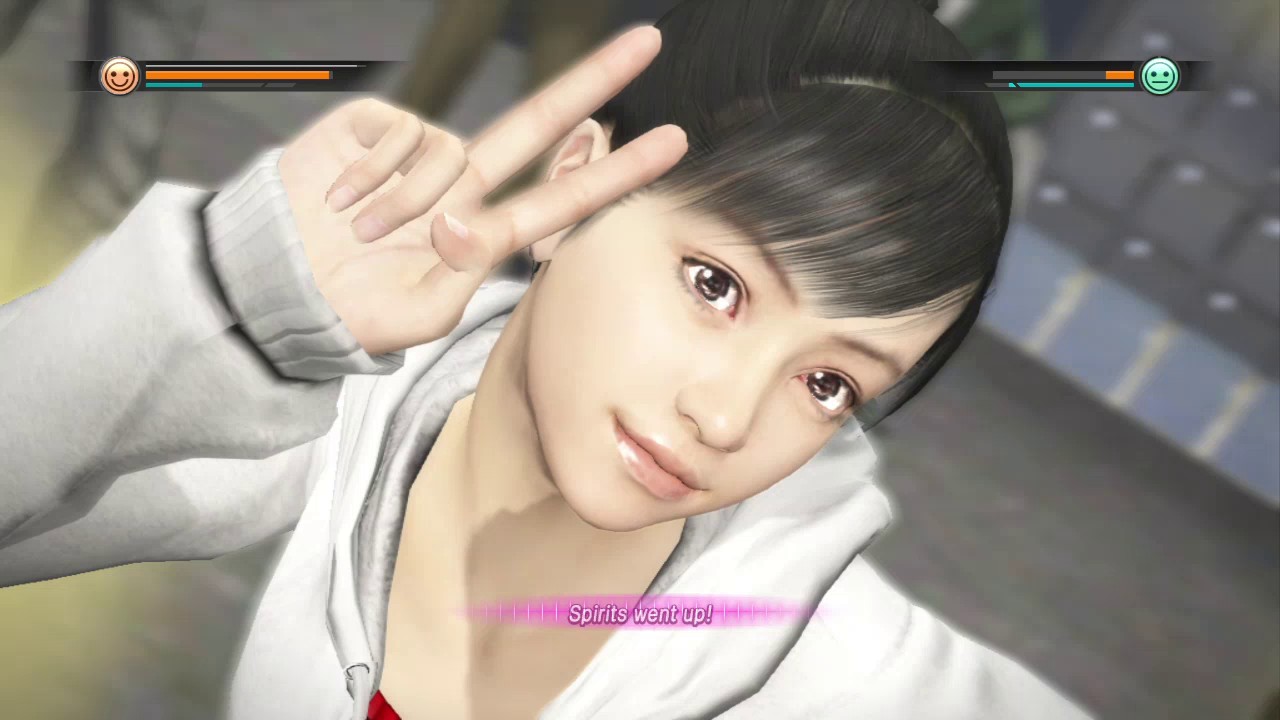
Haruka has also left the orphanage in Okinawa after being scouted by a talent director by the name of Mrs. Park. She currently is living by herself in Osaka and is working and training to become a pop idol. She is gaining in popularity and has been making a name for herself in a televised idol show called the Princess League but the road has not been easy for her as she is trying to juggle training for stardom on top of adapting to a new school with none of the people she knows and loves around her.

Seijima has willingly surrendered after the events of Yakuza 4 after having his previous prison sentence commuted and is currently serving a two year prison sentence in Hokkiado. He is nearing the point of his parole for good behavior, but life inside prison has been difficult as groups appear to be out to get him, and nearing the end he hears some troubling news about his blood brother and friend, Goro Majima.

Akiyama is still the eccentric proprietor of Sky Finance money lending. Giving out exorbitant sums of money with no interest or collateral in return for it, and instead forces people do seemingly odd challenges or tests to earn their loan. He arrives in Osaka on business business trip to open up a new branch of Sky Finance, when he receives word that one of his clients with 300 million yen loan has turned up dead.  Being in town, he goes to investigate the circumstances behind the death.


Shinada is an adult entertainment writer who is basically scrapping a living. He lives in a shack, is behind on his rent, and is in some serious financial debt with a shady lender. His real problem is he is serving a lifetime ban from professional baseball for gambling and game fixing. He only played one at bat where he hit a game winning walk off homerun, and immediately took the fall for cheating. Now a mysterious client is willing to pay him a significant sum of money to try to learn the truth behind what really happened that game. 

Shinada is one of the more sympathetic characters in the Yakuza universe.
Just an honest guy caught up in a bad situation.

So obviously, the zombie infested events of Yakuza: Dead Souls clearly were not considered canon, so the game picks up a few years after the events of Yakuza 4, although in this installment we actually have the story take place in a number of different locations over the course of 5 cities. That's actually a pretty significant jump in space from Yakuza 4 which was held specifically to Kamurocho. The good news is despite having more characters to control all with different motivations, the story in this one felt a lot less convoluted. They pretty much punch out why each character is motivated in a single line: Kiryu is trying to stop a war, Akiyama is investigating a murder, etc. etc.

At its core Yakuza 5 doesn't shake up the the formula of its base gameplay if you are a regular fan of this franchise. It plays as kind of this hybrid of an on foot Grand Theft Auto style sandbox game fused with elements of JRPG styled "random battles" with a 3rd person brawler style of combat. If you have played any of the previous Yakuza games outside of Dead Souls this won't come off as a radical change of pace.

Yep, Seijima's insane superhuman strength is still on display.

But at the heart of Yakuza game is its ability to cram as much different possible shit into its package, and its even done so more here. I think I have discovered the proper way to explain this. The Yakuza franchise is like a Sega singularity. It is a swirling vortex at the center of the Sega universe and any game that exists under their fold eventually has bits and pieces forcibly drawn into the Yakuza games to contribute some of its own to the new iterations. In short, there is even more off the wall shit that you have to do in Yakuza 5. Some of it story related, some of it optional.

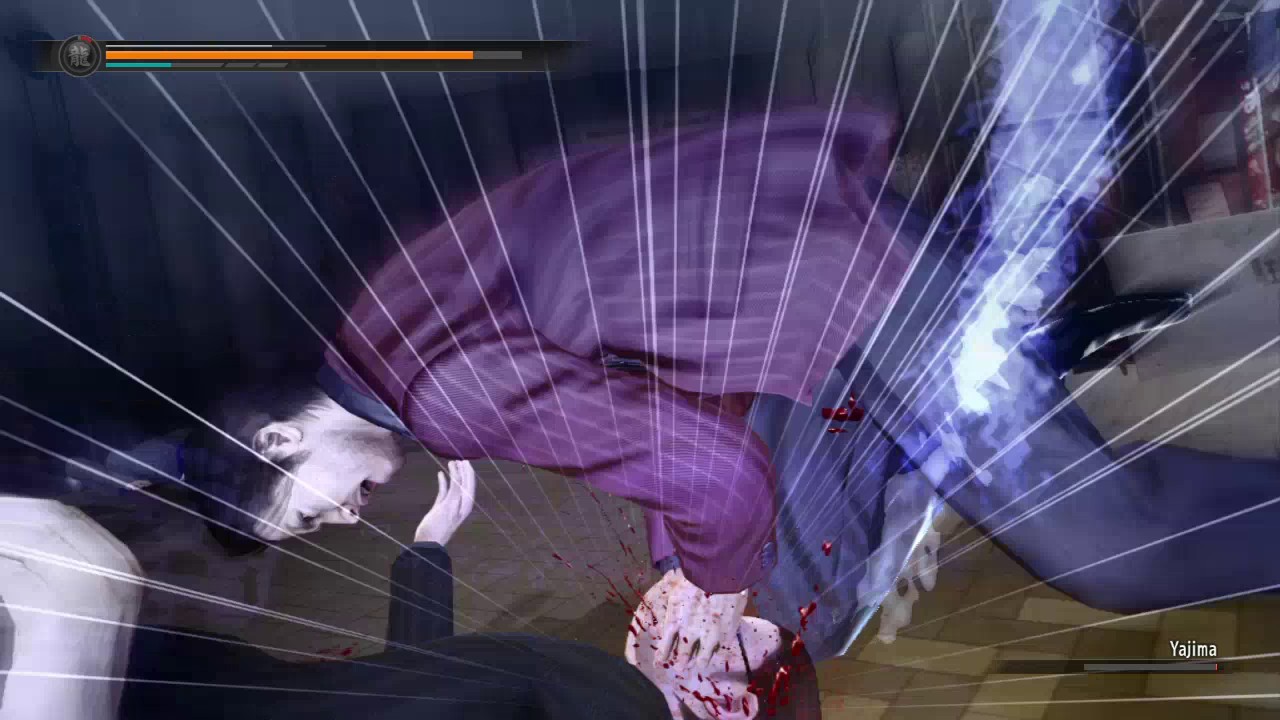
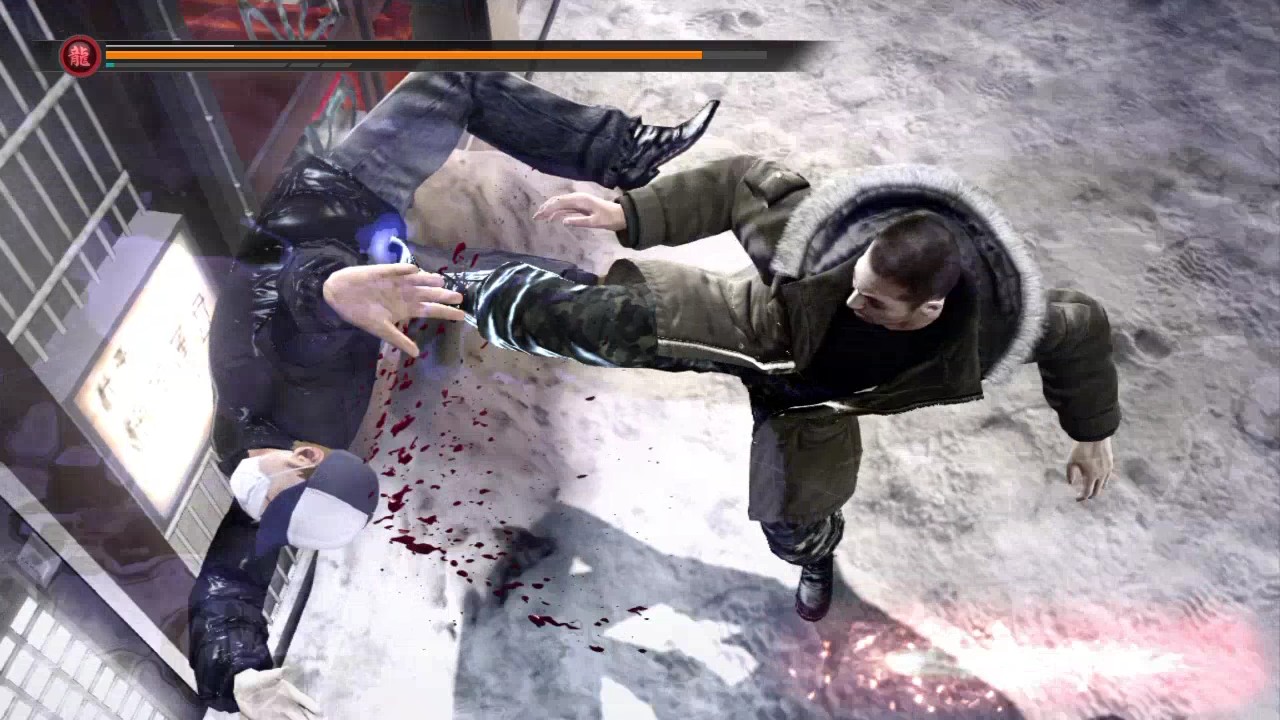
To give you a brief rundown, here are some of the things I have done in the first 40 hours of play: beat the shit of a lot of people, played Taiko Drum Master, worked as a Taxi driver being scored by my ability to obey the laws of the road, lost 50k on a pachinko machine, drag raced against a gang of sexy female street racers, broke out of prison, eluded my pursuers while riding a snow mobile, played Virtua Fighter 2, got into a fist fight with a grizzly bear, hunted for deer, took part in a comedy troupe audition, guest starred on a tv variety show, performed a j-pop rhythm game concert for a crowd of screaming fans against a rival act who performed simultaneously, went bowling, shot pool, threw darts, participated in multiple handshake events, received beauty tips from a transvestite, dance battled strangers on the street, swung someone by their shirt collar spine first into a light post, and a shit ton of other things I am not remembering.

You seriously fist fight a goddamn bear.  Seijima is a bad dude.

Yakuza 5's ability to cram so many different methods of gameplay into a single game is mind blowing to me. The only comparable game that I can think of that does that much is obviously Grand Theft Auto but even that franchise doesn't put in other games from its parent company within its own game. Honestly it makes reviewing a game like this difficult for me because I like to go into detail on how the game plays and how well it works, which I can't really do with Yakuza 5 because the game is constantly throwing so many different elements at you, you are constantly learning new controls. There is almost too much.

So lets focus on the main mechanic of the game: the fighting. This was always the Yakuza games bread and butter and for the most party it hasn't changed here. You get jumped by some random shlub on the street and the pass pedestrians for a ring for your and your attacks to fight in. You get a series of Light and heavy attacks that when pressed in certain order execute different move types, you can lock on and block, you can dodge, there are weapons scattered about the street that you can pick up and wail one you opponents with. Essentially the core of the Yakuza fighting engine hasn't changed.

All of the characters have unique tricks for fighting, but none of them slug it out better than Kiryu.

Fighting charges up your heat gauge, and when you hit a certain point you and you are in the situation that fills certain conditions, you and nail a heat move for big damage. I will say that the visceral of the heat moves do feel like its been somewhat turned down, but not a lot. Make no mistake about it, there is nothing easy to watch about a guy pinned on his knees and getting repeatedly kneed in the face before taking a massive kick in the neck. (But somehow also always fun to slam a bicycle on someones chest and jumping stomp on it.). I think its the lack of blood or teeth flying out of a dislocated jaw that was so prevalent in Yakuza 4 that is making it easier to stomach.

There is now also an additional red heat gauge that gradually builds over the course of several fights. This can be used for a big essence attack that usually can bring down a group of baddies (or a single enemy depending on who you play) for massive damage. There are also a few little tweaks to the combos which give you a little more to try out, but if you have played the Yakuza games before the combat doesn't change all that much. It doesn't have to because its works.


Which is funny when I think about it, because when I compare the button layout to the recently reviewed Senran Kagura: Shinovi Vs I find myself wondering what is it about that game that made the combat feel a bit more bland, while Yakuza's feels so much more skillful. Perhaps because Yakuza's is a bit more precise. Blocking takes effort, and you can't really mash at random to pull off the more damaging combos, and the multitude of different heat moves you can do the punish your opponent makes the game's combat blow open even more. Perhaps it felt like I was just performing the same combo in Senran Kagura over 15 characters, and I feel like I'm mixing them up more in Yakuza 5.

People still attack on the street for some of the most ridiculous reasons and they are just as hilarious this time around as well, but I think they got the sense that they were getting annoying to some people because now a number of them just transition right into the fight sequence without hearing Johnny Nobody explaining his imagined slight against you.

Way back when I wrote that first review for Yakuza 4, I had one major "complaint" about the game, and that is was that seeming out of the blue in this convoluted story of seedy gangsters betraying each other I had to break in the game to make a girl looking for a major loan play pretty pretty princess dressup at a hostess club 3 tortuous times. I suppose it gave context to how Akiyama does things, but it was insanely out of place and took a bit longer to do than I cared for. I couldn't blame anyone if they stopped playing the game because of it.

You may not run them anymore, but you can still go to hostess clubs to go on dates.

Yakuza 5 steps it up a notch by giving you a whole new insanely out of place chapter. Now lets be clear here, Haruka has been around since the very first game of the franchise and she deserves to be a part of the narrative as much as any other character does. But she's not a grizzled veteran of the yakuza, she's not a debonair bad ass money lender, she's not a thuggish ogre who took out 16 people at once, or any of the other character types that have graced this series. She's a young girl growing up.

So I guess the play to make her relevant was to send her down the route of a pop idol. So while she does have some major events that happen with her that do pertain to the story, all of her missions involve game modes that are a major departure from the combat. For lack of a better way to explain it, it seems like Haruka's chapter is a means of getting the player to try the minigames Yakuza 5 has to offer. Some of them are original just to her like all the dance performances, TV appearances, and so on. But some of them are just ways to get you do things you could already like shoot pool or throw darts.

Who am I kidding? I am a sucker for a rhythm game....

It's almost as if Yakuza 5 is afraid you might miss all the extra stuff you can do in the game, so it gives you Haruka's chapter to make sure you don't miss any of it. That being said, I didn't feel it was as much of slog to get through than the hostess club thing was. And its actually in Haruka's chapter that kind lays the whole foundation for why Akiyama gets involved, which of course ties into Seijima's chapter and... well you see how this works out. Yakuza is always pretty good at weaving together a compelling narrative.

Naturally, as with any game there are a handful of things that I didn't much care for. Most obviously in the case of Yakuza 5 is how fucking long I had to wait to get it. THREE YEARS! Come on Sega! Sonic is a dead horse that does not draw appeal anymore. Give it up. Please start localizing the quirky and different, the tired and overused just leads to disappointment.

Accurate depiction of Sega western localization announcements. 

I mentioned that this installment of Yakuza felt like the combat is less visceral. And while yes I felt it made the combat easier to stomach and get through, it was that sense of violent uncomfortableness that kinda made it original. It made the actual combat feel like it had some weight behind it. To give an example, say you play God of War: from the press of the start button your gutting and disemboweling people pretty much at the moment you take control of the game, and inside of minutes you become desensitized to it. The weight is gone, it becomes meaningless because that's the norm.

Now say take a take a game like Heavy Rain: there is some violence, but virtually no combat. Only on a few pivotal scenes you're character takes excruciating damage, and he reacts accordingly. Its absolutely brutal and almost impossible to watch. Because you barely see it. I feel that's the balance Yakuza 4 had managed to strike. The combat is regular, so you wail on baddies and its not unsettling because its what you do, but those finishing heat moves are cringe worthy because they are a quick snap of brutality in an otherwise "video gamey" fight. I dunno, This is just a personal nitpick.


This might be the first time I've said this but I think Yakuza might actually be trying to do too much now. I love how much extra stuff they put in these games and it really is become a bit of a staple to the franchise. But I like them more as extras. When you try to put them in as required story mechanics, it feels like you are trying to pad out the playtime. You are building this really interesting narrative of betrayal and impending gang warfare, so I feel the grizzled battle hardened Yakuza member doesn't really need story segment where he needs to fish for trout. Let me know the extras exist, but don't force me to put off the story to do it.

This is why this review has take so long to put out. I had the game purchased and was playing it way back in October or November of last year. At time of writing I've got to be close to 60-70 hours of play time, and I am still working my way through the final chapters of the game. Unless I make a conscious effort to skip side missions, the progress has been slow. And slow progress is big reason games get put down. A game should never feel like a slog to complete.
Yes, I still make time for bowling. Shut up. 

Being digital only kind of sucks. I prefer a physical release with case and instructions but at this point I was willing to take this game in any iteration I could get my hands on. Unfortunately even with my download speed, a 60 something GB download is a bitch and a half to wait for to download and install. My heart goes out to those with slower download speeds and god forbid data caps/overages.

While the story is less convoluted, some scenes do run longer than I feel they need to. This has always been a bit of an issue with the Yakuza games because there are so many repeated points and pauses for reaction when they could be getting to the point. There is a particularly tortuous scene near the end of Shinda's chapter where he's basically held at gunpoint for no joke 10-15 minutes. It drones on forever like a scene out of Metal Gear when the point could have been made in a few lines. But then again, if you have played any of the previous Yakuza titles this will not be something that surprises you.

I very much enjoyed the story, but a little editing down couldn't have hurt.

The game eventually brings you back to Kamurocho, which has been the main location for the most of the Yakuza series and honestly, I was kind of  disappointed when it did. When I was playing at all these new locations it felt like the story was evolving. But finishing here makes me feel like I'm playing Madden: Yakuza Edition. The city hasn't changed, everything is where it was. I've been here for 3 games now. I was kinda enjoying having new maps to learn. It just kind of makes the game feel like a copy-paste after such a strong start. So when I finally got back to Kamurocho, I just skipped all the sidequests because I just wanted to finish the game.

This continues to bug me, but for some reason I never feel the character models look good for the average. All of the man characters look very human and realistic. Yet any somewhat major NPC for the story just doesn't look natural to me. For lack off a better of a better explanation they feel some what slapdash and quickly put together. I guess on the whole its not too much of an issue, but when you are doing romance missions at a hostess club, its in full frame and just looks bad. Now, I know they are actually interviewing Japanese hostesses for later installments of the game, so maybe this will be fixed in the future.

Obviously, Haruka doesn't fight. So the game has dance battles to give you conflict when wandering.
Yakuza-5_2015_10-30-15_010
Handshake events just feel like the worst thing in the world.

So I guess the ultimate question is, did it live up to 3 years of expectations? Well, yes and no. Did it provide me a new Yakuza storyline with new characters, locations, and plot twists? Yes, it certainly did on that front. Did it give me new gameplay mechanics: Yes, it added it multitude of different things to shake up the regular sandbox play. Did I get my money's worth? I would say 60+ hours is money well spent for a video game.

But at the same time, the longer I played it, the more it felt like I've played it before. It probably would have had more punch if the play time was shorter. There are lots of new minigames, but they feel shoehorned in. It didn't feel like it changed enough. I think I would have really liked the not localized Yakuza Issin because that turns the game into a period Samurai piece. That would have shaken up the whole formula and made it new and interesting. I would have been into that. But continuing the modern day narrative requires more change to keep it interesting. It started stronger but had a weaker finish.

That being said, Yakuza 5 is another satisfying installment to this series. The game is still very good despite starting to feel a little repetitive. It has no shortage of different mini games to play so there are a lot of different distractions. But I do think the game is going to need to change soon lest it wear itself out for future installments. Fans of the series will play it. I enjoyed and recommend it, but you could get a similar experience from Yakuza 4 for 20 bucks.


T-Set, you were horrible twats. I will never forgive you.

Tuesday, July 22, 2014

Parasite Eve: Mitochondrially Mighty.

I don't usually go back and do really OLD games for my reviews. I had my Silent Hill introspective over at hashtagnerd.com but that's because Silent Hill is still somewhat relevant and is very significant to me as a gamer. I went back and covered Muramasa and Valkyria Chronicles but those were still on current gen systems at the time. But during the last winter prior to my releases for the spring, I have been dusting off some of my old PS1 games.

One of them always kinda stood out to me. It was one that was really original in concept and at the time a big departure from Square's usual style of games. Before they really started cranking out CGI out the anus they really had a solid philosophy for their JRPGs that were producing some classic titles. Square was riding high on big releases such as Final Fantasy 7 and Final Fantasy Tactics.  But in 1998, they released what ended up being one my first action-rpgs that I can remember playing.

PARASITE EVE:(PS1)


The story takes place with NYPD rookie Aya Brea (*swoon*) stepping out of a car at Carnegie Hall for a evening of opera on a Christmas eve date she really doesn't want to be on. Trying to make the best of it she takes her seat and the show begins. 

As the show proceeds, Aya meets the gaze of the lead singer Melissa Pearce, and suddenly the people in the audience begin to spontaneously combust. As people start to burst into flames and flee the burning building, only Aya and Melissa are unaffected. Aya charges the stage gun drawn, but Melissa only responds that Aya's mitochondria need time to awaken and flees. Aya pursues her down to the sewers where Melissa mutates into a horrible monster, and dubs herself reborn as Eve before she escapes.

The following day, Aya informs her superiors at the police station to try to explain what went down, and they are naturally at a loss. But as the day progresses they find out Eve is moving towards a crowd assembling at central park, and Aya moves in to hopefully stop another catastrophe.


So as we can clearly see, this game is a bit of a soft science nightmare. But interestingly enough, it is slightly based on a bit of truth. Mitochondria are a legitimate organism that lives within the human body, and they do generate heat energy much in the same fashion as the game describes, although not to the point of spontaneous combustion. I thought that was sort of interesting.

Although this game is technically the first in the series, its actually a sequel to the Japanese book/movie that came before it. While its been a while since I have actually watched the film and played this game, I believe there is a point in the game where the Japanese event is referenced within the story. So this is a cool little piece where all the elements related to it are all connected in one way or another.


So what is it about this specific game that I love? Well, in 1998 you can consider it to have a pretty progressive battle system for its time. Now, the loosely defined "Action-RPG" genre can be considered as far back as the early 80's for when it actually got its start. But I would definitely say that this specific title is one of the better examples of that sub-genre. If anything, it tends to blend 3rd person shooter, JRPG, Survival Horror, and action together fairly well.

As you move through location to location in NYC, you will have many JRPG text exposition segments helping you move the story along. Once completed with that, you move to the next location or stage of the game (I'd say more comparative to an action game as once you beat an area, you can come back even through you don't really need to). In each location you'll have some story line related goal in order to proceed with the story: Find this person, fight this boss, get this item, etc etc.

At least traveling from location to location is fast.

The combat though is definitely its biggest seller for me. As you wander through the maps you will have random encounters JRPG style where mitochondria monsters appear. There isn't a screen transition so you have to use the map you are on, which means the obstacles that are in place (chairs, tables, counters, etc). You have a freedom of movement and to a degree the battle is active. So you will want to try to keep your distance from the enemies at hand to avoid taking hits, although their range varies depending on monster.

When you go to attack, the combat freezes and a wire-frame dome appears around you. This represents the range of the gun you are using. As long as the dome reaches the enemy, its almost always going to be a hit, if they fall outside of the dome you can still hit, but there is a chance the shots will miss.


You usually have a varied weapons at your disposal like pistols, shot guns, machine guns, tonfas (batons), and at one point a rocket launcher. All of them have varied ranges and abilities, and different degrees of customization. To be 100% honest though, There really is no reason to use anything but the pistols. They have the best ability to customize, decent range, decent rate of fire, decent power. Once you collect enough junk (literally 300 pieces of it) to make a top tier weapon, you basically can customize the best pistol with the right status effects to basically rip enemies asunder.

But it wouldn't be a Squaresoft game if there wasn't some RPG in there. Because of Aya's resistant mitochondria, she also has some special abilities. Most of them play into idea that her mitochondria are self sustaining, so many of them are curative. Abilities to heal, remove poison or ill effects, speed her self up or slow enemies down. She does get one attack ability where you can fire an energy shot, but after a story segment and boss fight you get Liberate, which allows Aya to transform and do massive damage to everything. I actually kind of prefer the ability imbalance because it allows me to focus on boosting a specific weapon type.


The game has got a pretty decent soundtrack to it too. Its a blend of rock and techno to its more notable themes, which I think is an appropriate fit. The game has more of an action bent with horror elements, so I feel the rock complements that well. Yet we are knee deep in soft science, so the techno feels right at home in those moments. Both tend to get more slow and melodic for exposition moments. Aside from the main theme I don't think I could hum any of for you, but the whole thing just feels... I dunno, right?

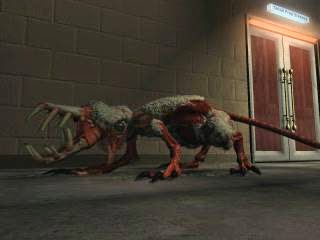
This is also one of those games where CGI kinda blew me out of the water. While the models for the human felt a bit anime inspired, the monster transformations were pretty bad ass. I remember my jaw hitting the floor as that first rat mutated into a monster. By today's standards it may be a bit hokey, but for its time I can't think of another game that would have such detailed and grotesque mutations. I remember that this actually caused a bit of a stir because although the ESRB were already in place and rating games, few pushed the envelope in such a manner. I think in terms of gore Resident Evil 1 and 2 were the only ones really on par at the time.

Some of the transformations can be pretty gross. Even for 98.
Its also a bit of time sink as well. While I wouldn't say this game runs as long as most RPGs do, there is a EX-mode after you complete it. This allows you to replay the game with the last weapon and armor you had completed the game with, and everything you had previously stored in your police locker will be there now. The big addition to the EX-mode is the Chrysler building. A 77 floor randomly generating endurance test that will take you to the games hardest boss and the true ending of the game. I couldn't complete it without a guide that had all the possible floor combinations, but I hold it as one of the most impressive notches in my gaming belt.

Now that's not to say that the game is without fault. As you know, I don't think its possible to really make a "perfect" game, and there are certainly some issues to address here. Most notably, and this truly is the games biggest handicap, is that the movement speed is HORRENDOUSLY bad. The walk speed is about as fast as a slug super glued to the floor and there are no moments of stealth in the game, so why even bother with the ability to walk. Get rid of it, its a waste of time.


And the run is really not all that much better. While the animation clearly shows me she is running and putting in the effort, I'm fairly certainly an elderly woman with a walker and two bad hips can blow past Aya in the heat of battle. It makes me fuckin crazy.

The story is another issue here. I have played the game a couple of times, and the story is really the biggest part of it. While its the main driving factor in a Square game, it really is a complete mess at times and there are still aspects of the story that I still don't understand. It falls under what I refer to as "Tales of the Abyss Syndrome". When you have a lore or mythos that is incredibly convoluted and complex, you are going to find yourself with no real easy way to tell it. Abyss would try to go through these huge detailed explanations of everything taking place, and there was so much reading it would feel like homework.


The original playstation didn't have that much space to work with, making explaining Parasite Eve's limited exposition that much more important. To a degree, I feel that it has never really explained all that well. Something about a Japanese scientist losing his wife in a car accident, and trying to sustain her life by culturing the liver cells, but mitochondria within them take over and give birth to Eve. And then there is something about Aya losing her mother and sister in a car accident, and the surgery to keep her alive afterwards has something to do with it. Eve wants to get knocked up to make an "ultimate being" to create a new race, but there is only one of them and everyone else has to die or something. I don't know how it can propagate.

Also, this is around 98. So the 3D graphics weren't exactly there yet. They were a step up from Final Fantasy 7's super blocky character models, but given how far graphics have come along, this game hasn't aged all that well. A little too new to look good like a retro game, and a bit too old to hold up to anything that's come after it. To the graphics whores, this could be a major sticking point to anyone looking to try it. It's right on the cusp of time that has the FF7 fans screaming for a graphical update.


I think one of the most interesting things about Parasite Eve though actually reflects its series as a whole. Parasite Eve is the only franchise I can think of where every installment of the game fell under a different genre of game type. Parasite Eve is very clearly an action-rpg with survival horror elements. Parasite Eve II takes a much sharper Survival Horror bent right down to the Resident Evil style tank controls, with a sprinkling of rpg elements. Nearly a decade later, 3rd Birthday (essentially Parasite Eve 3) came out as a 3rd person shooter, and much of the JRPG has been squeezed out of it. I can't think of another series that's gone this off road.

I just really like this game. I recommend it to everyone. If you missed this one the first time around, its really easy to get ahold of. Its in the the PSN store in its digital classics, and you can get the disc version on ebay for like 2 bucks used. It was a really a unique piece and an interesting part of game history in my book. I think its one of these things SquareEnix should sit down with for a few hours when they are reflecting on why their game sales are down. Go back to your classics, Learn your lesson.
If Squeenix fans are begging for remake of some of their older games, then this is one I put at the front of the line. Parasite Eve rules.


If Aya makes a Kingdom Hearts appearance, I am sold.